Between waters, 2024
with Nellya Dzhamanbeava
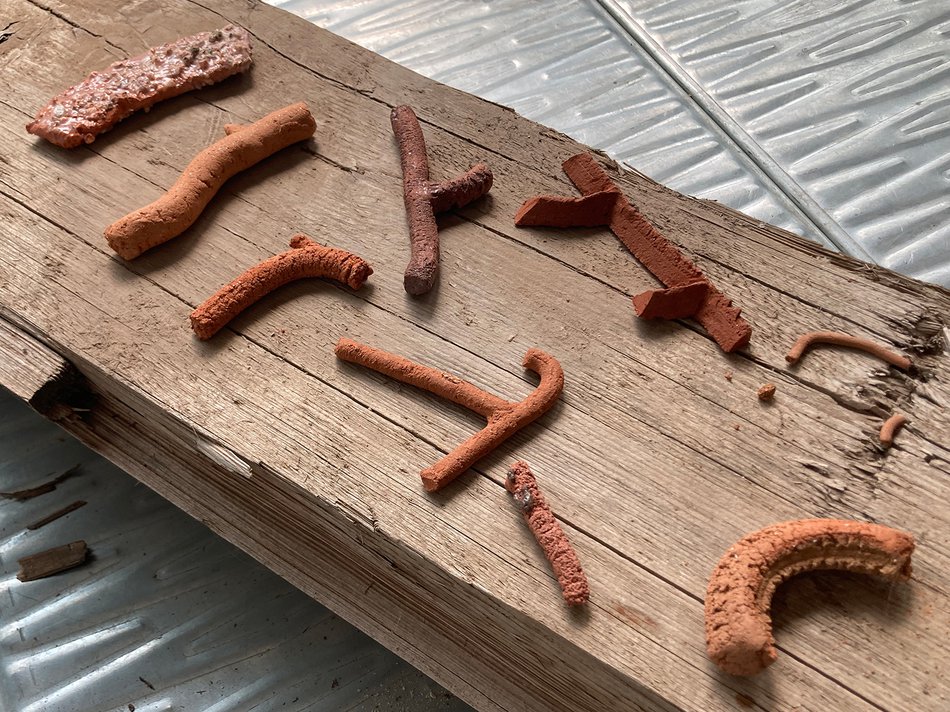
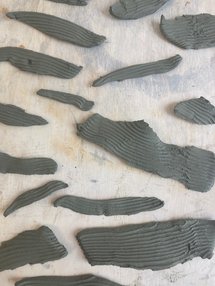
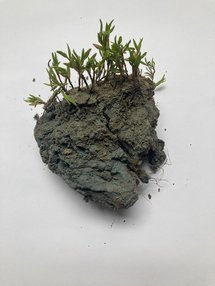
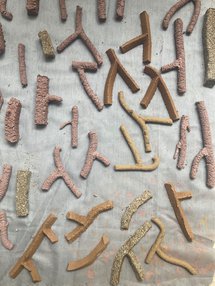
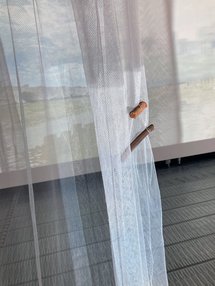
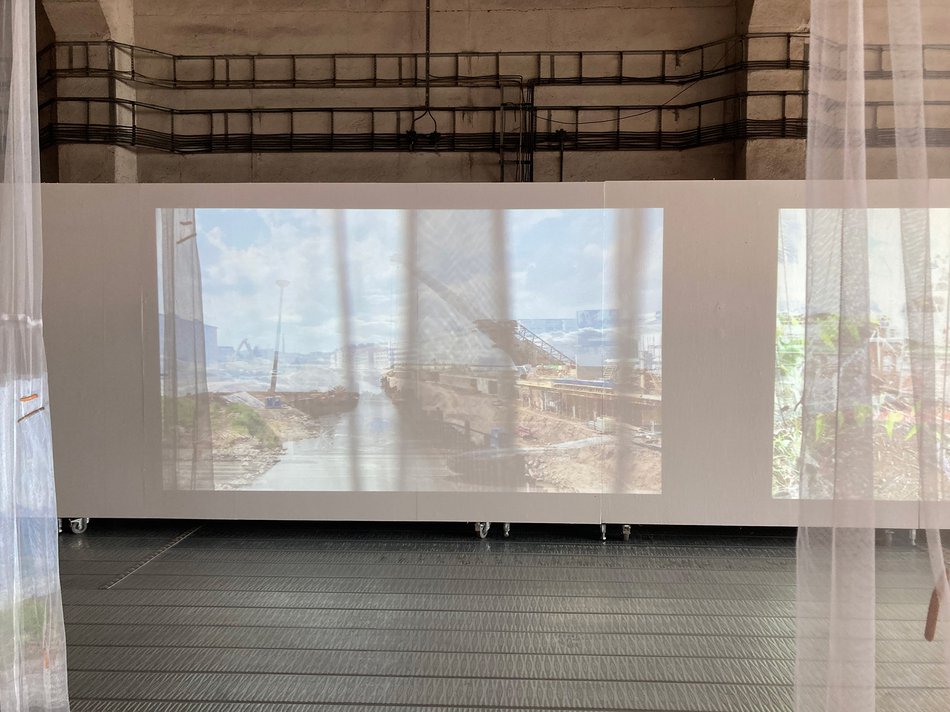
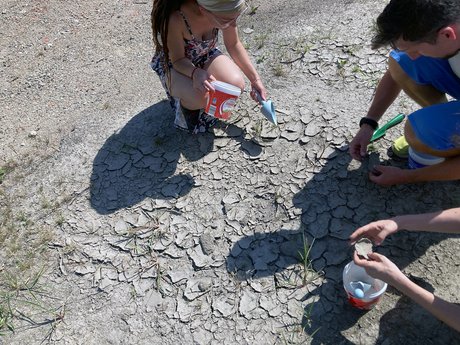
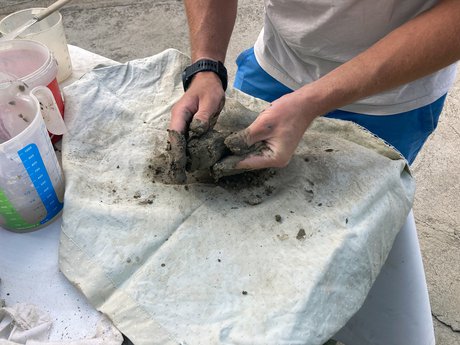
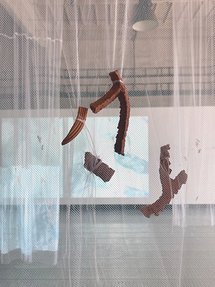
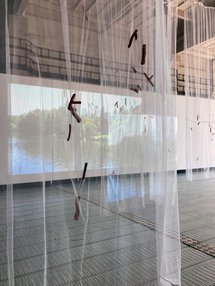
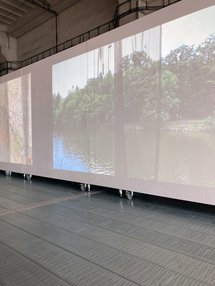
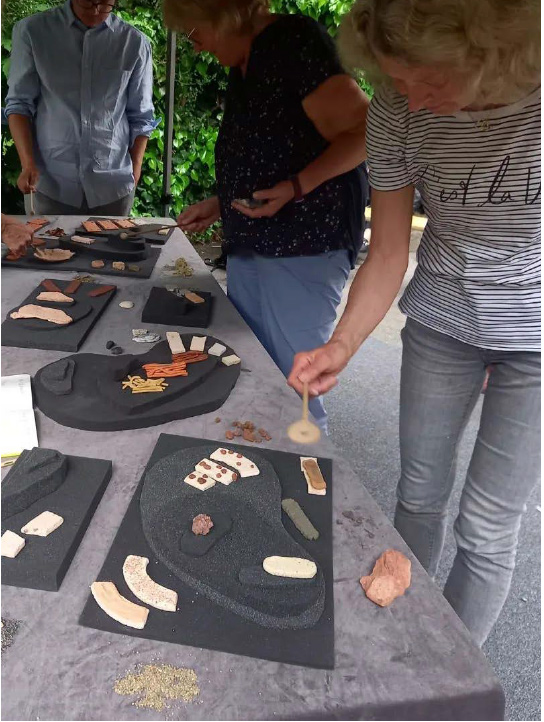
„Between Waters“ ist ein experimentelles und forschungsorientiertes Ausstellungsprojekt, das die Flüsse Svitava und Svratka in Brno erforscht. Aktuell gibt es dort viele Baustellen, denn die Stadt Brno möchte ein großangelgtes Revitalisierungsprojekt durchführen. Unklar bleibt, wie das den Zugang zu den Flüssen für die Anwohner*innen verändern wird. In der Ausstellung werden vor Ort gesammelte Sedimente wie Ton, Lehm und Sand in Form von Flussabschnitten mit digitalen Videoprojektionen zu einer ortsspezifischen Installation kombiniert, wobei durch die in die Vorhänge genähten Keramiken Schatten in den Projektionen erzeugen, die an Störungen von Wasserströmen erinnern. Experimentelle Workshops laden Interessierte dazu ein, wildem Ton zu sammeln, aufzubereiten und Mikrowellenbrennofen zu brennen. Die in den Workshops entstandenen kermaischen Objekte werden Teil der Installation und werden zu Anekdoten über das Leben in einer Stadt zwischen zwei Flüssen in Veränderung.
Almost red, darkbrown when wet, 2023
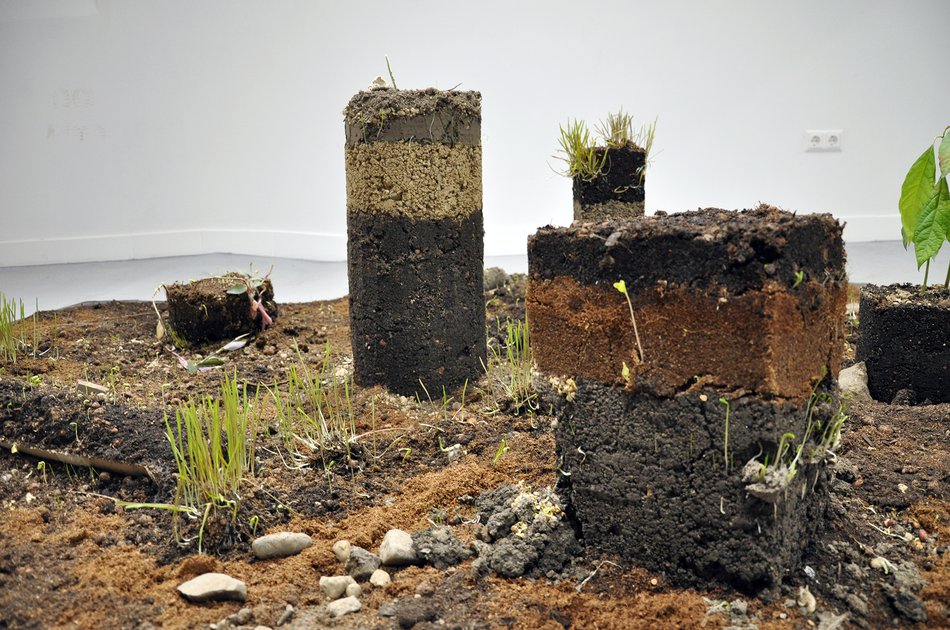
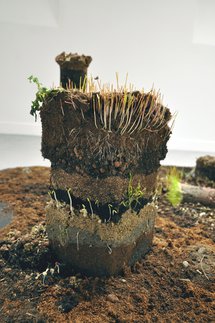
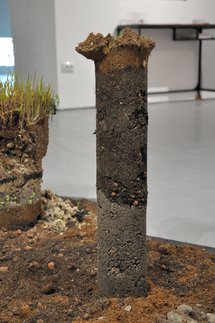
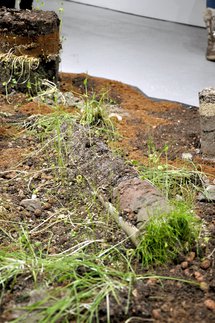
soil, plants, seeds, audio speakers
A collaborative multi media isntallation with Nellya Dzhamanbaeva
Nellya Dzamanbhaeva and Roswitha Weingrill were working on a multimedia installation dealing with individual notions and experiences of growing plants in the context of migration. Interviews offer a glimpse into the thoughts of people who moved to Vienna from different parts of the world and how transitioning between countries, regions and ecosystems affected their views on gardening. The participants were asked questions about their early plant related memories, getting their hands dirty while planting or being capable of taking care of plants. They generously shared their expertise on evolving conditions for planting crop like access to land and ground, different shades and states of soil in and which seeds they would like to safeguard for future generations.
The data gathered in the interviews was then used to create simple statistical models Models of statistical data related to migration in Vienna are turned into sculptures made out of different kinds of soil collected in the surrounding areas of Vienna. Seeds and plants mentioned in the interviews are added to the layers of the moist soil and left to germinate. During the exhibition the seeds and little plants will continue to grow while slowly breaking down the rigid forms of the statistical data soil sculptures. At the exhibition closing visitors are invited to take the plants with them in little pots provided by the artists.
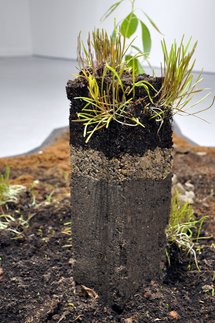
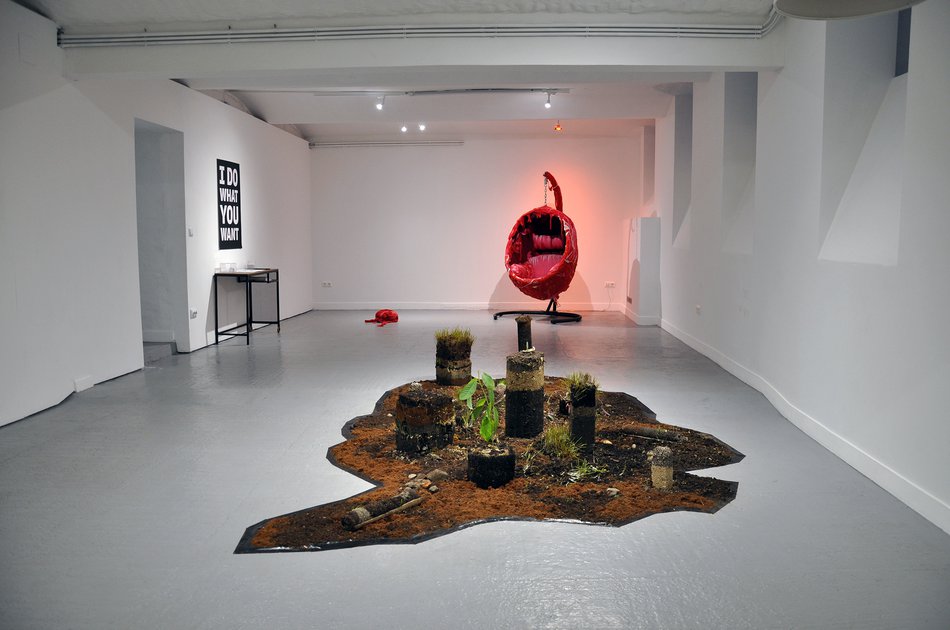
Artworks in the background by Frederik Marroquín, Leo Lisa Begeré & anto_nie
Sonic Soil / Performative Lecture, 2023
Wilder Ton, Sand, Mineralien, Mikrowelle, Schamottofen, Schutzkleidung
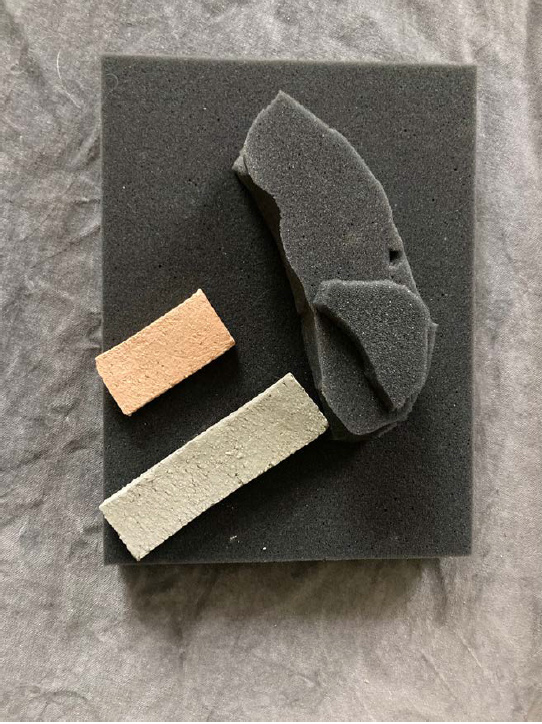
Seit mehreren Jahren sucht Roswitha Weingrill auf Spaziergängen Materialien wie Lehm, Sand und Steine und sammelt mineralische Alltagsprodukte wie Perlite für Zimmerpflanzen oder Katzenstreu mit vulkanischem Ursprung. Die Materialproben brennt sie im Mikrowellenbrennofen auf ca. 1000 Grad. Manchmal passiert nicht viel, manchmal schmilzt die Testscherbe und erstarrt mit einer glasartigen Oberfläche. Dann wieder sorgen strukturelle Spannungen im Material dafür, dass die Materialprobe in kleine Teile zerspringt.
„Da muss ich dann daran denken, dass meine unscheinbare Materialpro-be möglicherweise einmal als bis zu 2400 Grad heißes Magma im Inneren der Erde zirkulierte, bis sie als Lava ausgespuckt wurde, am Boden des Urmeeres erstarrte bevor sie durch den Drift der Kontinentalplatten zu gigantischen Gebirgen aufgetürmt wurde, nur um an der Oberfläche der Verwitterung Regen, Sonne, Wind und mehr ausgesetzt zu werden, dann als Geröll unter Gletschereis durch Täler wanderte bis sie kleingeschliffen durch Milliarden Liter Wasser als kleine Sandbank im Bach hinter der Bushaltestelle zu enden.“
In letzter Zeit hat Weingrill angefangen, aus den Materialproben kleine Musikinstrumente zu formen. Einfache Xylophone, Glockenspiele, Triangel und Klangstäbe. Es fasziniert sie, wie unterschiedlich diese klingen, wenn sie mit einem Schlegel anschlagen werden. Manchmal entsteht dabei Musik, machmal Scherben. Egal, dann kommt die Materialprobe wieder in den Brennofen und der Kreislauf fängt von vorne an.
(Text: Veronika Hauer & Roswitha Weingrill)
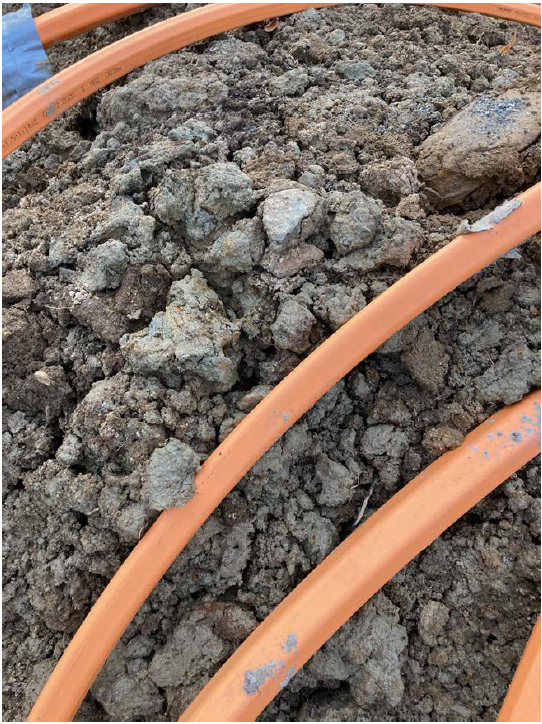
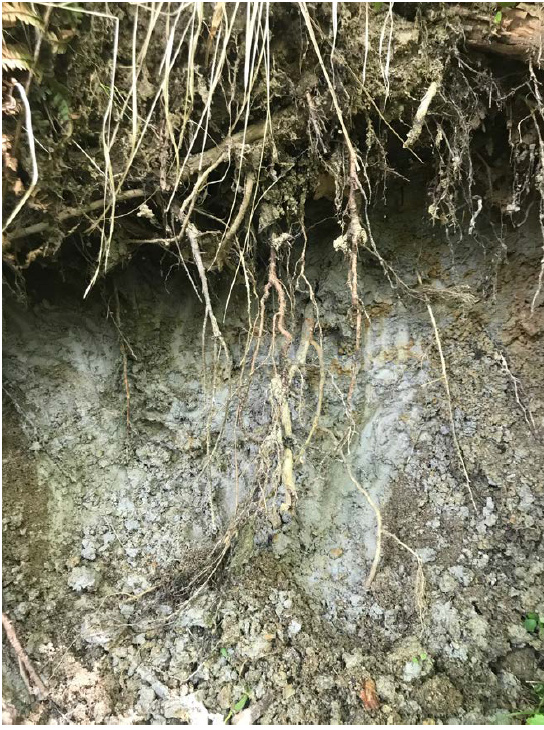
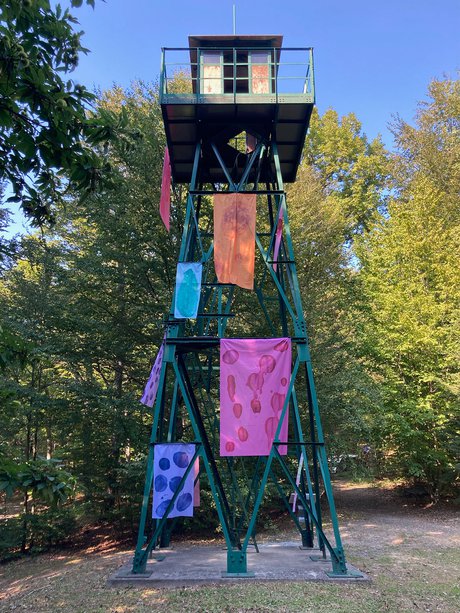
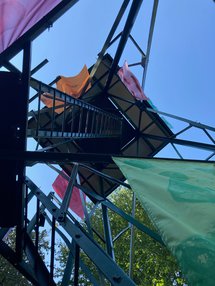
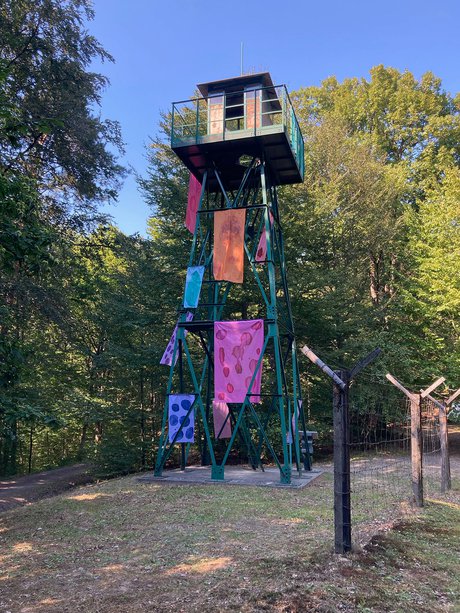
Das Projekt Mikropassagiere verwandelt den ehemaligen Wachturm im Dreiländereck HU/SLO/AT zu einem temporären, dynamischen Windspiel um. Auf zarten Stoffbahnen, Wimpeln und Fahnen sind bunte Samen, Pollen, Sporen und Mikroorganismen in starker Vergrößerung abgebildet. Diese mikroskopisch kleinen Teilchen der Natur widersetzen sich seit jeher den menschengemachten Grenzziehungen und sind doch, oder vielleicht auch gerade deswegen, ein integraler Bestandteil in der Entwicklung und Aufrechterhaltung von Ökosystemen, die schlussendlich auch für den Menschen von existenzieller Bedeutung sind.
Gleichzeitig feiert das Projekt Mikropassagiere die Bewegungsfreiheit indem es die verbindenden Elemente zwischen dem Neuhauser Hügelland, der Goricko (Slow. Hügelland) und der Vasi-Hegyhát (ungar. Für Vas-Berge) sichtbar macht. So soll das Windspiel dazu animieren, sich „vom Winde verwehen“ zu lassen und das sich Treiben-lassen als schöpferischen Akt des Widerstands anzuerkennen.
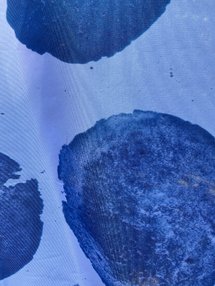
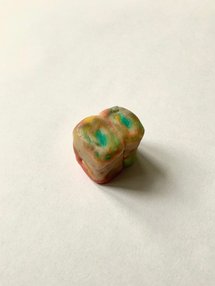
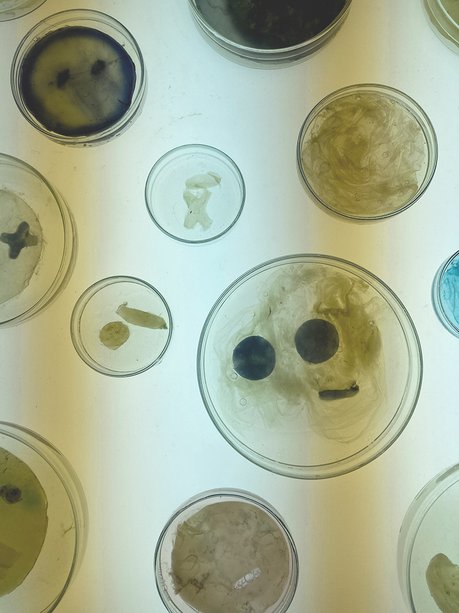
Das Projekt Emobrew umschließt mehrere Versuchsanordnungen, die sich um die (digitale) Kommunikation und die Prozesse des Verarbeitens im Hirn vs. im Magen drehen. Dabei wird der SCOBY (engl. symbiotic culture of bacteria and yeasts) des Kombucha „Teepilz“ verwendet, mit dem seit ca. 2000 Jahren Tee fermentiert wird, um ein gesundheitsförderndes Getränk herzustellen.
Insbesondere über unsere Emotionen zu sprechen und sie anderen mitzuteilen, ist entscheidend für unsere geistige Gesundheit, aber manchmal überwältigend. Emojis wurden zwar erfunden um die digitale Kommunikation zu vereinfachen, aber ihre Kürze trägt auch zu ihrem Potenzial für Missverständnisse bei.
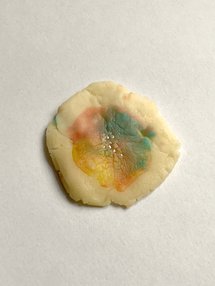
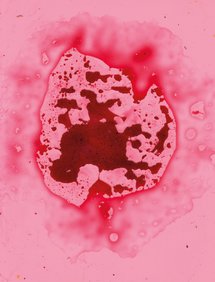
Emobrew ist als offenes Experiment aufgebaut: Schrift- und Satzzeichen sowie Teile von häufig falsch interpretierten Emojis werden in den SCOBY eingeschrieben. Mit dem manipulierten SCOBY wird eine neue zuckerhaltige Nährlösung angesetzt und dem Sauerstoff ausgesetzt. Bei der richtigen Temperatur und mit etwas Zeit baut der SCOBY den Zucker in der Nährlösung ab und verwandelt ihn in ein gesundheitsförderndes Getränk.
Das Emobrew Experiment setzt süße farbige Nährlösungen an, nutzt Schablonen und aus zuvor gezüchteten SCOBYs geschnittene Motive um Schriftzeichen, Symbole und Teile von Emojis im nächsten SCOBY wachsen zu lassen. Jeder Durchgang an Fermentation hinterlässt eine weitere Schicht am SCOBY und vertieft die Komplexität der dargestellten Emotionen.
lllabor, 2021
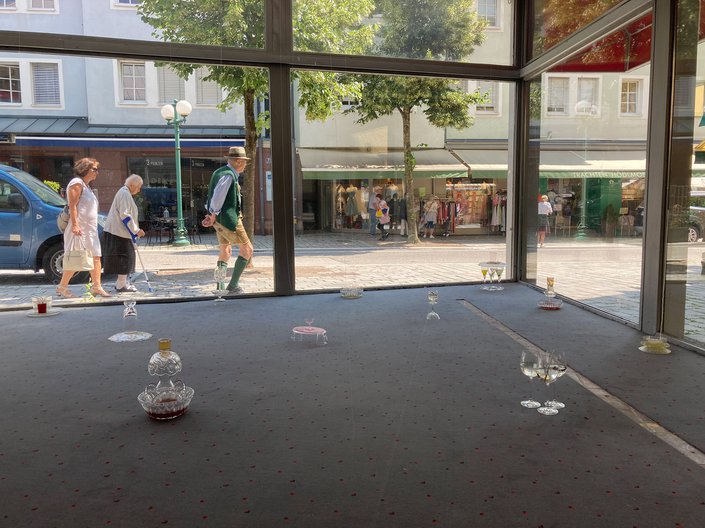
Speisesalz, diverse Fundstücke, gebrauchte Gläser
Das weiche Ocker vergilbter alter Postkarten oder das blau im öffentlichen Raum getrunkener Alcopops leihen ihre Farben den wachsenden Kristallen. Der Spuren alter Veranstaltungsplakate am Portal des Lehártheaters bilden bunte Flecken und die Neonfarbe des Notausgangspfeils tönt die Kristalle grün. Ein gefundenes Sportoutfit lässt sich auskochen, aber gibt kaum Farbe her. Während eines Aufenthaltes in Bad Ischl im Rahmen der auf!auf! Residency im ehemaligen Lehártheater beschäftigte ich mich einen Monat damit, aus verschiedenen Fundstücken Essenzen heraus-zufiltern um sie in gesättigten Salzlösungen kristallisieren zu lassen.
Die oberösterreichische Kleinstadt Bad Ischl ist als ehemalige Sommerresidenz des Kaisers Franz Joseph bekannt und noch heute vermarktet der regionale Tourismus das kaiserliche Image gewinnbringend. In der selben Stadt wurde jedoch auch die Kriegserklärung zum ersten Weltkrieg unterschrieben, ein Umstand der zwar erwähnt wird, dessen weitreichende dramatische Folgen aber kaum thematisiert werden. Ebenso wenig wie die bis heute kaum aufgearbei-tete brutale Enteignung jüdischer Villenbesitzer während des Naziregimes. Die Ischler Idylle weist also durchaus auch Schattenstellen auf, die keinen Platz in der Erzählung von glitzernden kaiserlichen Romanzen zu haben scheinen.Manche der Fundstücke werden deutliche Farbspuren hinterlassen, während andere Stoffe sich nicht sichtbar in den Kristallen niederschlagen oder nicht aufgenommen werden. Dem spielerischen Experiment leidenschaftlich verpflichtet ordnet sich das lll – Kristalllabor an einen kaleidoskopisch schillerndem Ort zwischen Alchemie, Science Fiction, Wissenschaft und Anekdote ein.
Blanca Moser Nuschelbrunnen, 2020
Sperrholz, Solar- und Brunnenelemente, Plastikkübel, Wasser
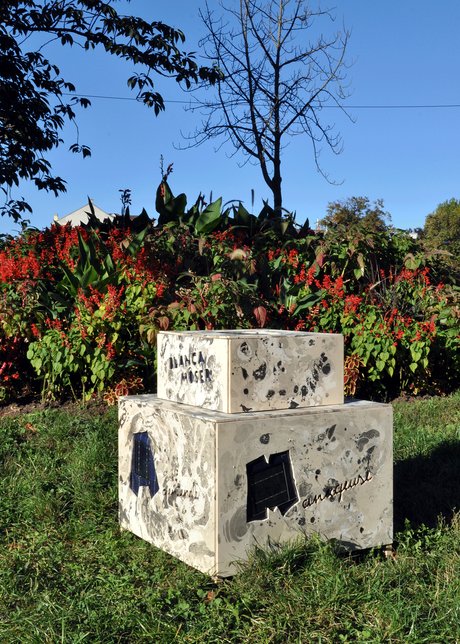
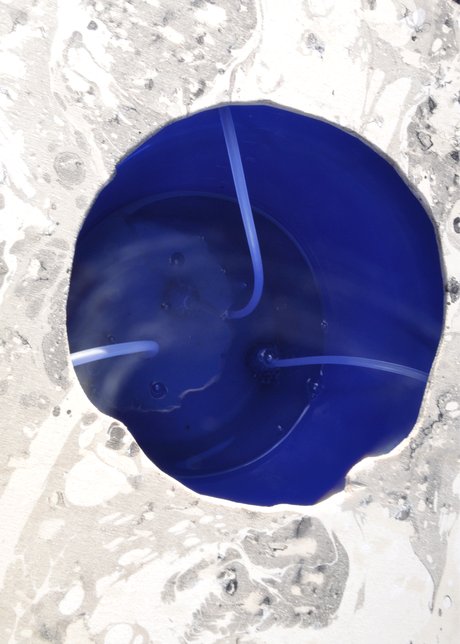
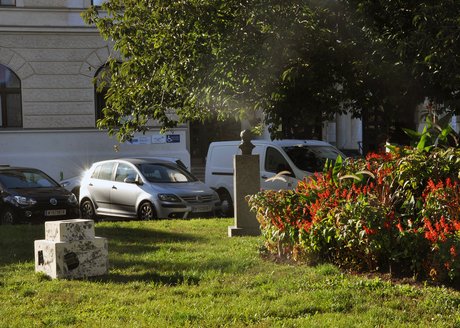
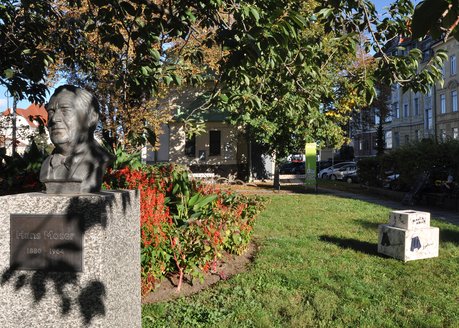
Der Blanca Moser Nuschelbrunnen feiert die Verdienste von Blanca Moser, geb. Blanka Hirschler, die ihren Mann von den Provinzbühnen der K.u.K Monarchie holte, um ihm zum späten Durchbruch als allseits beliebter Volksschauspieler zu verhelfen. Aus einer jüdischen Schauspielerfamilie stammend nutzte sie ihre präzisen Kenntnisse der Theaterwelt um Hans Moser, geb. Johann Julier, Engagements zu vermitteln, Verträge zu verhandeln und mit ihm Rollen einzustudieren. Sie überlebte die Terrorherrschaft der Nationalsozialisten im ungarischen Exil.
Die Gestaltung des Brunnens hebt die Leistungen von Blanca Moser hervor, die gemeinhin hinter ihrer Bezeichnunge als Hans Mosers Ehefrau verwschwinden. Die Begriffe Buchhalterin, Mangagerin, Archivarin und Agentin. sind aus der Verschalung des Brunnens ausgeschnitten und legen die dahinter liegenden Solarpaneele frei, die den Nuschelbrunnen in Betrieb setzen.
Müde Gesten, 2020
Matratze, Decken, Stoffe, Geldscheine, Plastikfolie
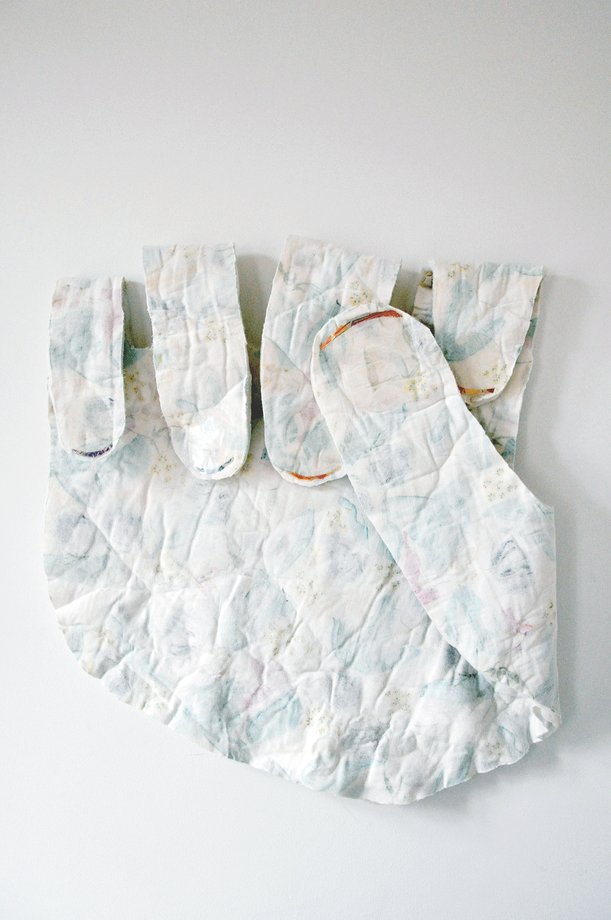
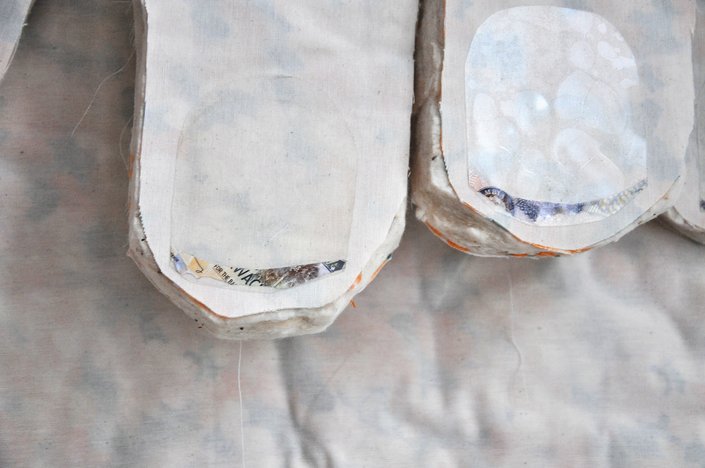
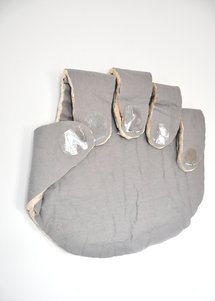
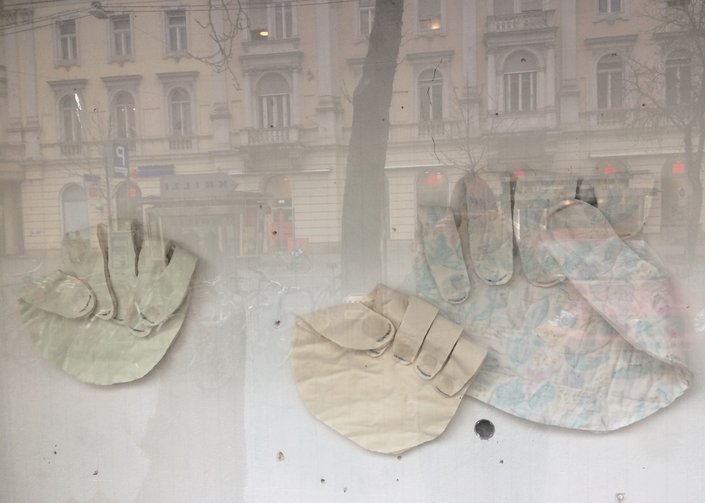
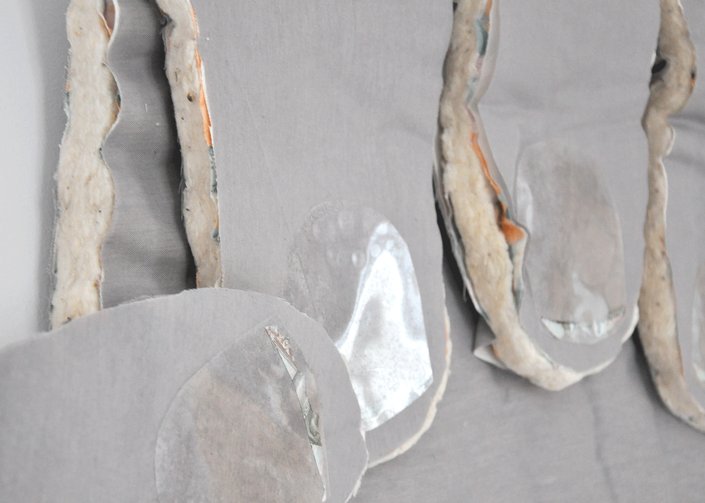
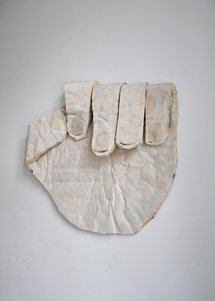
Die Finger der überdimensionierten Stofffäuste aus der Serie „Müde Gesten“ haben Dreck unter den Nägeln: Reste von Geldscheinen blitzen in kleinen Halbkreisen unter den aus Folien zurechtgeschnittenenen Nägeln hervor. Der Kampf im und gegen den Kapitalismus hinterlässt eben seine Spuren.
TIRED GESTURES, 2020
bedding material, banknotes, plastic foils
The oversized fists from the "Tired Gestures" series are made from bedding material and have dirt on their hands: small semicircles of banknotes are visible under the fingernails. The struggle in and against capitalism leaves its mark.
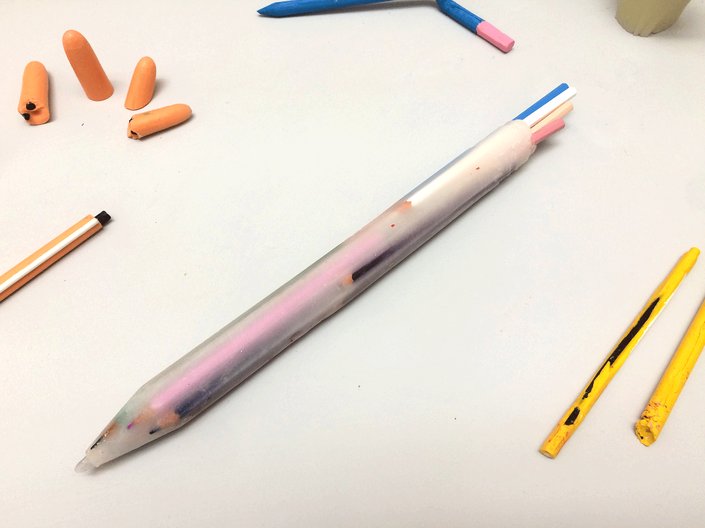
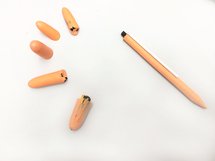
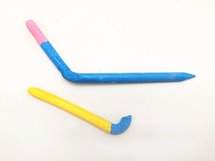
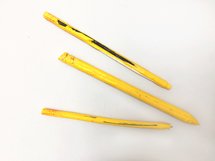
Paradox Toolbox umfasst absurde Zeichenobjekte und siedelt sich im Spannungsfeld von künstlerischer Originalität und ökonomischen Realitäten an. Basierend auf Forschungen zu Potentialen von online self-costumization der Wissenschaftlerin Evgeniia Filipova an der WU Wien werden übermäßig komplexe Stifte und Zeichenobjekte entwickelt, die so viele Zeichenmöglichkeiten bieten, dass eine zielgeführte Benützung beinahe unmöglich erscheint.